The Legend of Zelda: The Minish Cap
Developer : Capcom, Flagship
Publisher : Nintendo
Platform : Game Boy Advance
Release Year : 2005
Miniature Fun
The year is 2005. The Game Boy Advance has been out for almost four years, and the Nintendo DS is poised to take the world by storm. The end of the GBA’s lifespan is at hand, and as usual, some a system’s best games come out in their twilight years, and The Minish Cap is one of those end-of-life gems. Made by the same company (Flagship) that developed the Oracle of Ages and Seasons, The Minish Cap is a solid 2D Zelda game and a worthy entry in the series. While I don’t think it is as good as the Season games, The Minish Cap does have some interesting ideas and mechanics that help it stand tall with the other Zelda titles and make it a game that is well worth playing.
Gameplay
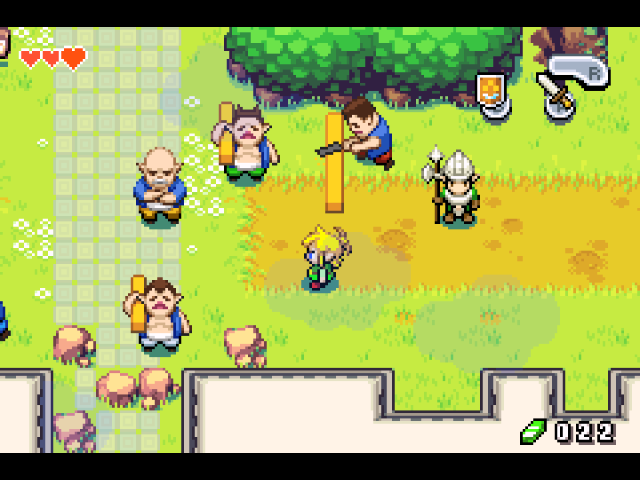
The Minish Cap plays like your typical single-player top-down 2D Zelda game. You take control of Link, as usual, and journey across the land of Hyrule battling monsters, looking for treasure, chatting with a variety of unique people, and delving into a (small) handful of well-crafted dungeons. Most Zelda titles have some sort of unique mechanic, ranging from time travel to controlling the seasons, and shrinking in size is this title’s claim to fame; I am happy to say that the size changing mechanic is really well done, and gives this entry in the series a vibe all its own. Shrinking down and seeing the land of Hyrule from a new and tiny perspective really changes how the world feels and how you interact with it: you are avoiding rain drops because they are the size of boulders, and getting hit by one is just as dangerous; finding ways across streams and ponds, because of our small size they are now raging rivers and massive oceans; and enemies that take only a single swing of your sword to defeat when you’re big are building sized behemoths when you’re small, posing a real and mighty challenge. The size changing makes for one of Link’s more unique adventures, and I can’t help but imagine what other games in the series would be like if you could view their worlds from this tiny vantage point.
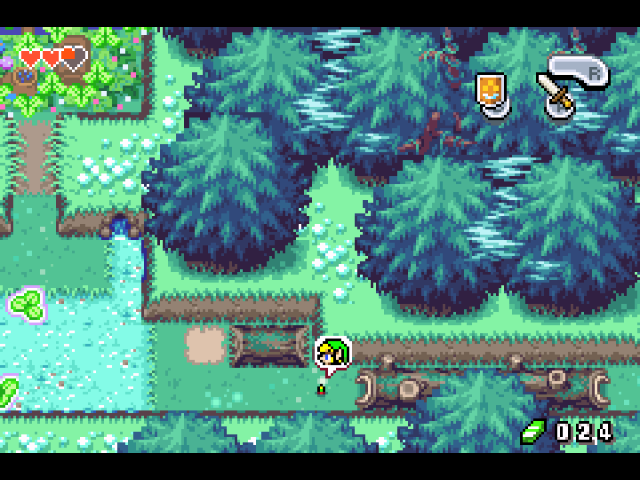
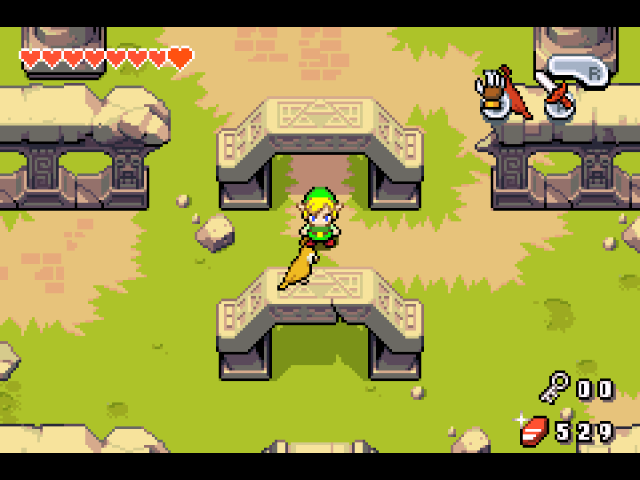
The core Zelda gameplay is here as you would expect, and just like with Flagship’s Seasons games, The Minish Cap is an amazing title in the series. The swordplay is fluid, and each of the game’s items play their part in not only solving environmental puzzles, but also in battling the beasts that are standing in your way. The interplay between using your gear to get around the world, and in defeating your foes is really well done here: some of the monsters are only weak against the gear you find along the way, making your items just as important as your sword when it comes to battling the foes of darkness.
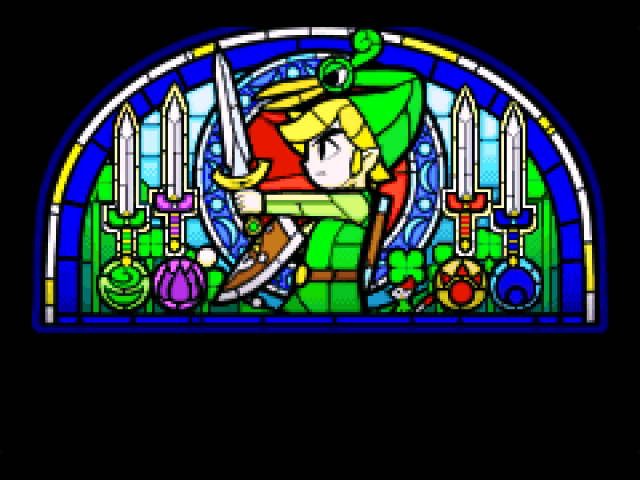
The sword in this game is not like the blades from other Zelda titles. Like the games that it is a prequal to, The Minish Cap features the Four Sword. The Four sword lets you split, eventually, into four copies of Link which allows you to interact with the world in a couple of unique ways. Sometimes you have to split so you can move heavy objects that bar your way, while at other times you have to split so you can activate multiple switches at the same time. It is a unique mechanic for sure, but a little underbaked at times. The two examples I use here are pretty much the only ways the whole splitting thing is used, and I was almost through this piece before I even remember that it was a mechanic in the first place. The whole Four Sword thing feels needlessly tacked on, and you could remove it, along with the few puzzles that need it, and nothing would be lost.
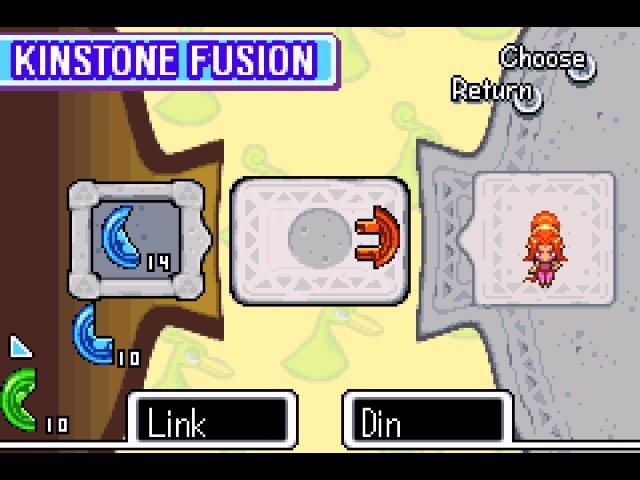
Another of this game’s unique mechanics is the Kinstone system. Throughout your adventure you will find kinstones (in one of three colours and a handful of shapes) inside treasure chests, from talkative NPCs, and as drops from defeated enemies. You then fuse said stones with a variety of people across the land, with the fusing of the stones opening new areas to explore or revealing hidden treasures to collect. It is a fun little distraction, and it’s nice that only a few fusions are needed to complete the game, and that the others give you money, arrows, bombs, or heart pieces. It is very much busy work, and more than a few times I felt like it was here to just extend the game’s run time, but at least it’s fun busy work.
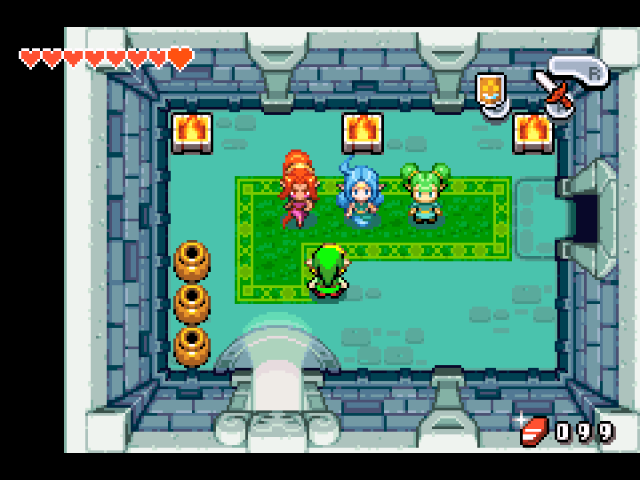
One of area where the gameplay really shines are the boss battles. I don’t want to give to much away, because I really think this is game that should be played, but I will say that the bosses here are a lot more involved than in the other handheld Zelda games. Defeating them is a more than just swinging your sword wildly, they are puzzles that require everything you have found and learned up until that point if you hope to succeed. I like that the bosses take some real thought to defeat, and that they’re more than just big balls of hit points that hit hard. Their visual design and encounter design are on point, and I honestly feel like they are some of the best boss fights in the series, especially among the handheld entries.
My biggest issue with The Minish Cap is the game’s length. Even when compared to the other Game Boy Zelda titles, this game is really short. Having only four main dungeons, and then one final dungeon, the game is over right when it feels like it is reaching its stride. The land of Hyrule itself is quite small this time around too, but it is densely packed with content which does somewhat make up for the lack of ground to cover. Link’s Awakening and the Oracle games had expansive worlds to explore, much like their home console counterparts, but here everything seems so small; maybe it’s because the theme of the game is shrinking down, and exploring the world unseen by most that the world is so small, but I can’t help but feeling like we’re missing something.
Presentation
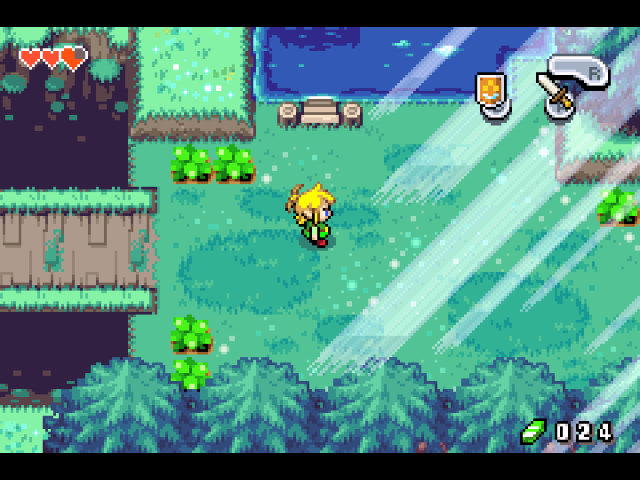
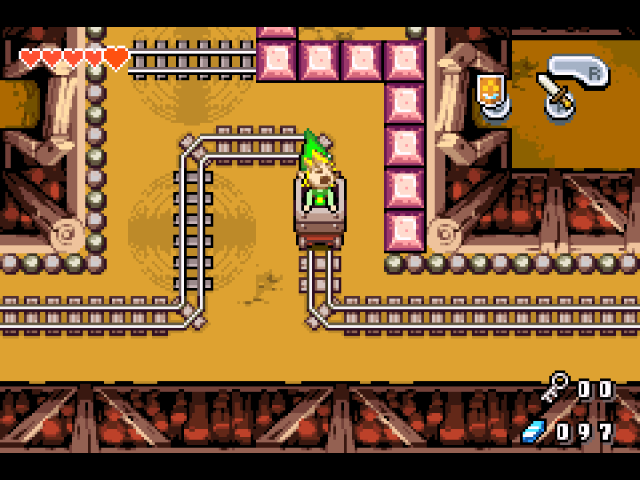
Like so many games that are released toward the end of a console lifecycle, The Minish Cap looks and sounds amazing. It is plain to see that Flagship is making damn good use of the GBA’s capabilities and are pushing the console to new heights here. The sprite work is absolutely amazing and is easily some of the best I have seen on not only the GBA, but in gaming as a whole. The sprites are beautifully animated, and even on such a small screen, they are all so vibrant and full of personality. This wonderful work translates to the land of Hyrule as well, with the world being alive with colour and just as much personality as Link, Zelda, and the NPCs. The game’s art direction is very reminiscent of The Wind Waker and leans quite heavily into the cartoon stylings of the Game Cube classic. I love how bright and colourful the whole package is, and I find that the cartoon look really fits a handheld Zelda game, maybe even more so than it’s home console inspiration.
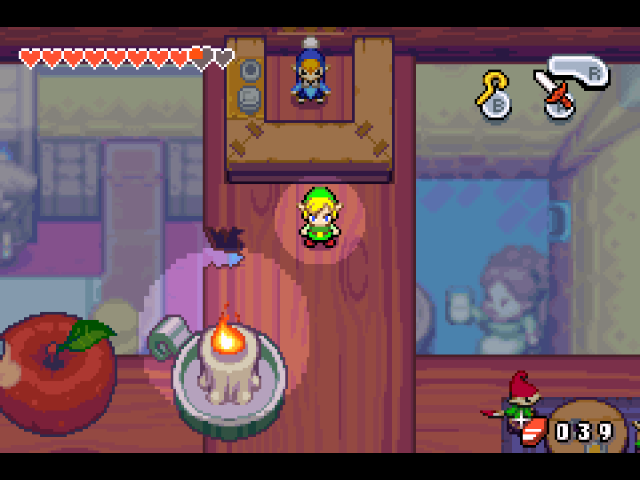
The sound design is also really good. Most of the music tracks are remixed versions of Zelda classics, with the remixed Lost Woods theme from A Link to the Past that plays in the Minish Woods being my absolute favourite. Each of the game’s dungeons have a unique song as well, and they are all really good at setting that adventuring mood. The sound effects are also really good and help to create a memorable and wonderful soundscape. The only thing I really dislike about the sound design is that Link yells and makes noise when you swing your sword and do most anything else. I know he does that in the 3D games, but here on the handheld, I found it really distracting and grating at times. It is a choice I would not have made, and for the whole run time of the game, I was bothered by it. Maybe it’s just a me thing, but I really disliked it.
Story
The Minish Cap acts as the prequal to both Four Swords and The Four Swords Adventure, going into the backstory of the villain Vaati, and also the origin of the titular Four Sword. I have never played the Four Swords games, but I was more than able to understand and enjoy the narrative here. Our story begins with Princess Zelda asking Link to go with her to the Picori Festival which is being held in town. The festival is to honour the Picori, a race of tiny beings who gave the ancient hero of legend the Picori blade and the Light Force, so he could seal away the darkness in ages long past. It is said that every hundred years, on the day of the festival, a doorway will open to the realm of the Picori, and that these tiny folk will return to the world to usher in an era of peace and prosperity for the land of Hyrule.
Our time at the festival is cut short when Princess Zelda is called to the castle to present this year’s award to the sword fighting champion, a young man named Vaati. The presentation goes awry when Vaati destroys the Picori blade that is sealing shut the chest of monsters, because he is sure that inside is the Light Force the legends speak of. Yet instead, the chest is empty aside from the monsters it held, which are released back into the world. In a rage at the lack of the Light Force, the evil mage turns Zelda to stone and leaves the Castle to continue his search. Link is then tasked with two objectives follow Vaati’s attack: first is repairing the Picori sword; and second is tracking down the villain. The King reveals to Link that the Picori, or the Minish as they call themselves, are indeed real and since they can only be seen by children, Link is the perfect candidate to meet with them and get the sword fixed.
Not long after Link sets out on his adventure, he meets Ezlo, a magical talking hat. He wasn’t always a talking hat, in fact Ezlo was a famous Minish (what the Picori call themselves) mage who created the Mage’s Cap; a wonderous hat that can grant wishes. The Mage’s Cap was eventually stolen by his student, who turns out to be Vaati! He turns Ezlo into a talking hat and is using his newfound powers to spread chaos throughout Hyrule. It is now up to Link and Ezlo to travel the land, collect the four elements so they can reforge the Four Sword, rescue the Princess, and stop Vaati. For a handheld game, the story here is fairly robust and is told as well as any of the other 2D Zelda games.
A Tiny yet Might Adventure
The last time I played The Minish Cap was when it was released some two decades ago, so playing it now was like experiencing a whole new game. I have been a fan of the handheld Zelda games ever since I experienced A Link’s Awakening as a kid, and The Minish Cap is a fantastic entry in the portable Zelda library. Sure, it is a little on the short side, but the beautiful graphics, amazing music, and wonderful dungeons more than make up for its short run time. I would have loved if the game went on for a bit longer, but I do appreciate what we did get and enjoyed the pintsized adventure for what it is.