Final Fantasy Legend
Makai Toushi SaGa
Developer : Sqaure
Publisher : Square
Platform : Game Boy
Release Year : 1989 JP/1990 NA
The Start of a Saga and a Legend
.
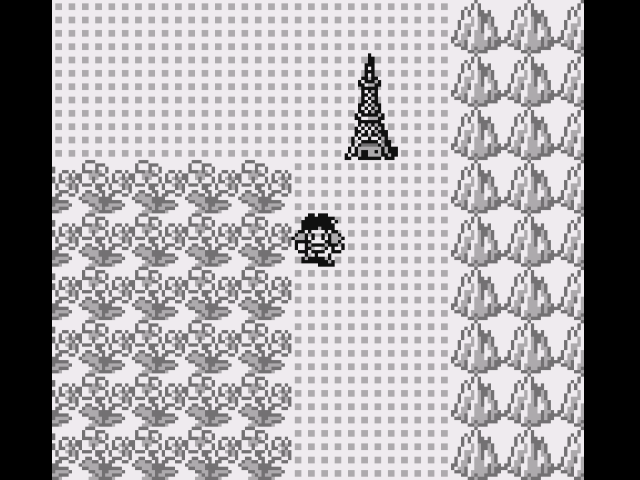
For a game initially released in 1989 on the Game Boy in Japan, and 1990 for us in the west, Final Fantasy Legend is a surprisingly complex and involved JRPG, especially when you remember that it was one of the first role-playing games released for the handheld. The history of the game’s title and release history over here in the west is almost as complicated as the game and its systems/mechanics. Known as Makai Toushi SaGa in Japan, this game is the first entry in the experimental SaGa series and would go on to spawn not only two more games for the Game Boy, but for the SNES, PlayStation, and beyond. When it was released here, Square changed the title to Final Fantasy Legend to help with the marketing, since Final Fantasy was already a well loved series of RPGs on the NES. So, you can see that Square has had a long history of curious naming conventions.
I remember playing this game way back in the day, and having absolutely no clue what to do, where to go, or what was going on. I’m pretty sure my buddy who had the game didn’t have the manual, so that, coupled with us being so young, it is no wonder that we go nowhere in a game as complex and obtuse as Final Fantasy Legend. So, coming back to it now, well over 30 years later, I am looking forward to actually experiencing what this title has to offer, and finally get further than nowhere. Now, let’s jump right into it and see what the first SaGa game has in store for us!
Handheld Character Complexity
First thing we do before embarking on the adventure it to make our character, who is also the leader of our party. The first choice is to pick from one of the three classes: Human, Mutant, and Monster. Each of the three classes are unique from each other in a few ways: 1) how each of them gets stronger/level up; 2) how many pieces of equipment they can equip; 3) and whether or not they can cast innate spells (as opposed to using a limited use spell book piece of equipment) and use abilities. Humans increase their stats by using items, while Mutants stats increase seemingly at random after battle, and Monsters increase or decrease in power by eating the meat that is left behind by the defeated enemies. When a monsters eats said meat, they morph into new kinds of beast with their own skills, spells, and attributes; sometimes good, and sometimes bad. It is kind of nuts that from the very start, Final Fantasy Legend lays on the complexity and asks a lot from the player, especially when games from this era tell you basically nothing in game. As a kid, I had no idea how important this decision was, and how important these class distinctions are when recruiting the rest of your party. Maybe the manual explained the classes and their nuances, but that was something we did not have, and since hoping online wasn’t an option, it is really no surprise that we got absolutely nowhere in this game.
The game’s complexity doesn’t stop at the classes, not by a long shot, it also extends to the equipment. Humans can equip eight pieces of gear, with mutants only being able to equip four, and monsters not able to equip weapons and armour. The weapons, spells, and abilities all have limited uses, with only spells and abilities being refilled when you rest at the inns scattered across the game. So, most of the money you get during your quest is going to be used up fast constantly buying and hording weapons. You need this horde of weapons because having them break mid dungeon, or out in the world, is going to ruin your day fast. This constant need for fresh weapons, items, and gear meant I was grinding a lot, because the biggest obstacle standing in your way aren’t the monsters who are trying to kill you, it’s the amount of money you need for all the weapons you’ll be buying.
There is a lot of gear in this game, and I mean a lot. Your armour come in five types (helmets, gloves, breastplates, shields, and boots), as well as the weapons (swords, hammers, whips, gun, and spell books). One cool thing about the weapons is that they range from medieval to futuristic, which was something I was not expecting. I went from swinging a classic short sword to a laser sword, and from shooting a bow to fire a gun, or hell, launching a nuke! It’s also awesome as hell that one of the best melee weapons here is a chainsaw. This mixing of fantasy and science-fiction is one of the things I really love about this series, and I am looking forward to eventually trying out the SaGa games on the PlayStation to see if they also mix the two genres.
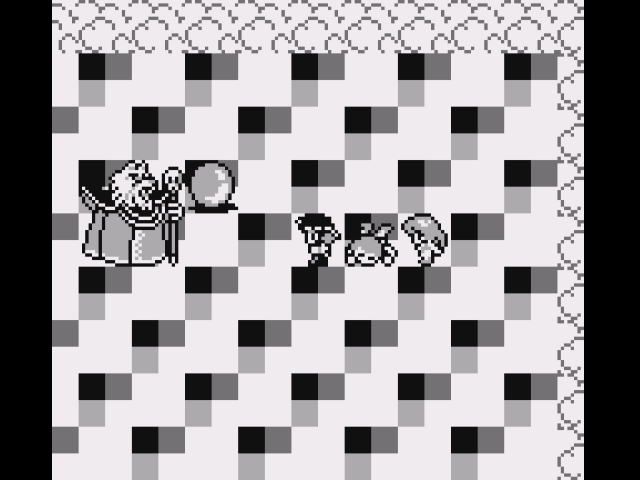
Another mechanic that is pretty unique here is the how party members are revived, which I know sounds weird, but hear me out. Each of your party members have a limited number of hearts (from 3-5 to star), and every time they fall in battle you will have to revive them in town for the cost of one of those hearts and a bit of money. Once that character is out of hearts, that’s it, they’re dead for good, and you have to go and recruit a new party member from the guild. I’ve seen similar things in tactical RPGs, but never in a classic JRPG, so it was a cool little feature. My only problem with this whole revival mechanic is that it makes your party members feeling more like units, and not real characters.
It is all thanks to the internet that I was able to learn what I needed to know in order even really start the game on the right foot, let actually play the game and see what it has to offer, because none of it is explained to you in game. This lack of explanation was par for the course back in the day, so I can’t really hold their absence against the experience as a whole, no matter much it sucks at times. Mechanics, story, and everything else needed to play these old games was taught (sometimes) to you in those wonderful booklets you used to get with games, so it would be stupid to hold that against Final Fantasy Legend. I’m thankful that the walkthroughs on good ol’ GameFAQs, as well as a few posts on Reddit, were there to teach me all of this. Without them, I don’t think I would have had the patience to get through this game.
If there is one thing I hate about this game, along with the game’s direct sequel, is the whole limited use weapon mechanic, and how much needless grinding it creates. You’re always broke because you just bought a bunch of new weapons and armour for your party, and now you have to grind to make back that money, and more, since you’re going to need to replace those weapons sooner rather than later. It also made me never use the “good” weapons I would find in dungeons until it was too late, since I was worried about them breaking at the worst possible moment. Prices in the shops also skyrocket quick as the adventure goes on, which makes the grind ever worse. Now, you also have to remember that if you have any Humans in your party, you also need money to buy them their stat upgrading items, which as you have probably guessed already, are going to cost you an arm and a leg when you really need them. And it doesn’t stop there; you’ll also need to buy armour for your party’s Humans and Mutants, as well as scores of HP and MP restoring items, and it’s not hard to see how much grinding is going to be involved in earning the huge sums of cash you’ll need throughout the quest. It never ends.
The Neverending Grind
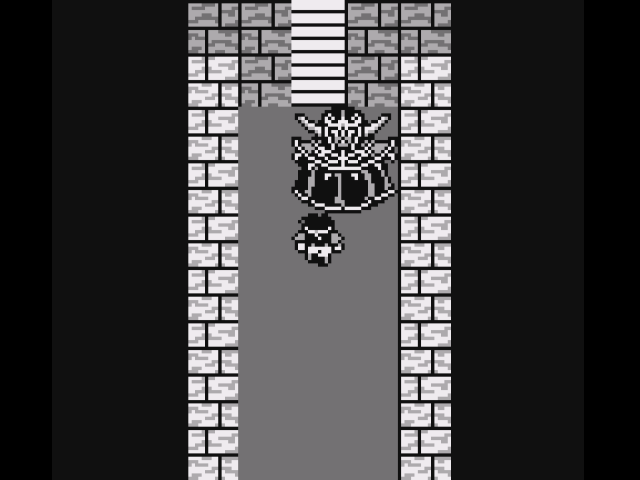
The battle system in this game is a pretty by the numbers turn-based affair: you transition you from the map to the battle screen when the game decides it, and then you and the monsters take turns attacking each other. The Humans use weapons, like swords, hammers, spell books, and guns to fight, while Mutants and Monsters attack with spells and abilities. Some spells and attacks will damage a single enemy, while other damage multiple mobs, which is to be expected. The combat is nothing you haven’t seen before if you’re a fan of JRPGs, especially the turn-based ones, but for such an early release on the Game Boy, it is good enough. It does make the grind tolerable, and it was fun enough that I didn’t mind spending 20 minutes here and there grinding just a little bit more.
A Hell of an Adventure
One thing I was not expecting when I started this game was how large scale the story was going to be, even if it is not told all that well. The quest takes place across several worlds that are all connected by a giant tower, with your party wanting to climb the tower so they can reach paradise. In each of the game’s four worlds (a classic sword and sorcery world; a water world home to countless islands and pirates; a world of nothing but sky and clouds; and a post-apocalyptic wasteland) and you complete quests, fight monsters, and defeat bosses so you can get the magical orbs and other MacGuffins needed to open the way so you can continue up the tower. It’s a basic loop, and though it is told by a pretty bare bones script, that is also translated about as well as you would expect for a game from ’89, the ‘plot’ is engaging enough to keep me going. It also ends with you reaching the top of the tower and fighting the Creator himself, which is pretty epic because ending an adventure by fight the god of everything is awesome.
I don’t remember the minutia when it comes to the game’s story which I think says a lot: It is your basic “defeat the four generals of the big bad, so you can then fight said big bad” game plot. If I was playing this just for the story I know I wouldn’t have finished it, but the high concept world as well as a solid, if basic, turn-based combat system kept me coming back time and time again on my work breaks until I watched the credits roll. I feel that it was impressive for it’s time, and I am glad that I finally got to experience the whole thing.
Bland Visuals for Wonderful Worlds
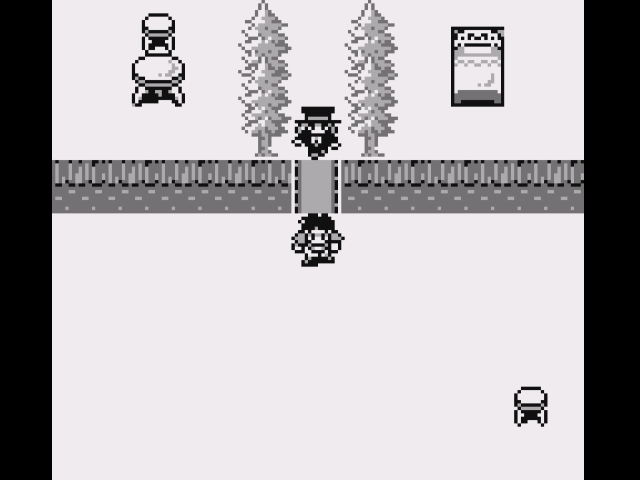
Final Fantasy Legend is not going to win any awards in the graphics, because they’re pretty basic, with it being the Game Boy’s first JRPG from ’89 and all. The game’s visual design is not terrible by any stretch of the imagination; it’s just looks rather bland. I do think the monster sprites in battle look pretty good, but when compared to the game’s sequels, they also look rather bland. Now, I don’t think this is because the actual art direction is boring, or that the developers were not trying their best, I think it’s more so a symptom of learning how ‘new’ hardware works, plus the fact they Game Boy was not exactly a powerhouse compared to the NES. As a base for Square’s RPGs to come on the handheld, Final Fantasy Legend is a solid one, and at the end of the day, it is still a fun little RPG.
Good Things to Come
If I didn’t have some history with this game, nor my deep love of JRPGs, I know I would not have finished this game. The obtuse character systems, bland visuals, and terribly translated story do not lend itself to easy pick-up-and-play, ya know? I kept with it because I wanted to cross it off my growing bucket-list(?) of games I want to play and finish. There are some cool ideas here, and sure, while some of those ideas aren’t perfect, I will always appreciate when developers take chances and try new things. I’m glad that I got to finish it, and move onto both of the wicked sequels, because it’s so cool to see how the series evolved over time, and I feel they just got better.
Do I think everyone should play Final Fantasy Legend? No, not really. I think it’s too obtuse and old school for most people, and if you’re adverse to using guides, then all I have to say is good luck with this one. For those of you who are still with me, and still wanting to give this game a go, then give it a try! I don’t think you’re going to be disappointed.
